The Making of'It's Always Sunny Around Here'Chapter 5: Cover Art
To read this making-of guide as a downloadable ebook, click here for the EPUB and click here for the Kindle version (AZW). To look at and/or buy the book being discussed, head over to Amazon.
I’ll be the first to admit it—although I’m not actively terrible at cover art, I’m also not very good at it, and it’s easily my weakest skill when it comes to being a publisher. That’s because cover art requires actual artistic skill, and I don’t have artistic skill, just design skills on how to lay out pretty-looking things, not the ability to make the pretty-looking thing myself. That’s why, if you’re going to spend money on any step of this process, it’d probably be best to spend money here, because the cliche is true, your book often succeeds or fails based just on the cover alone.
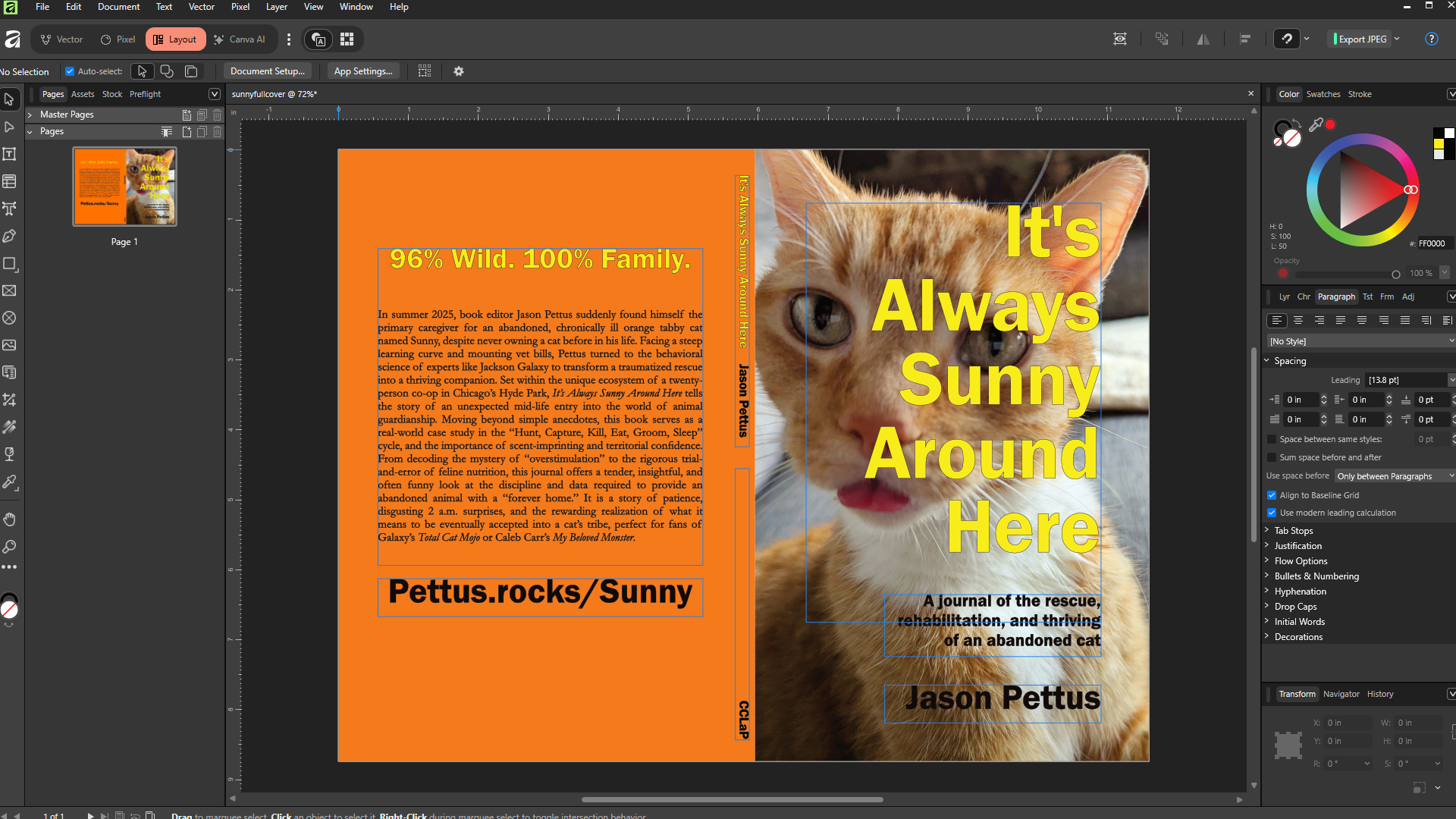
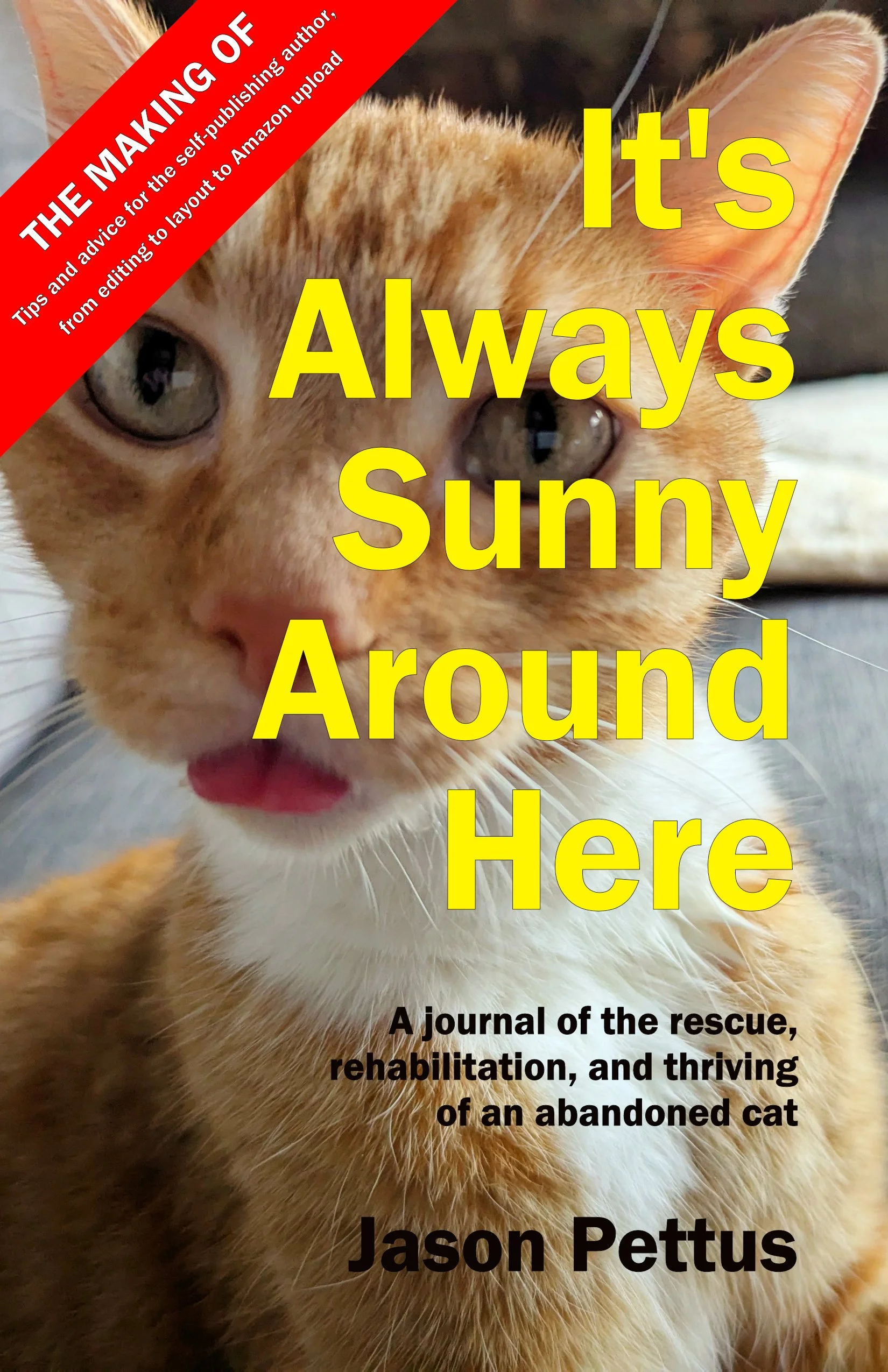
(Click on the image for the full-sized version.) If you are going to try to save money like I am in these books and go it alone, but are as bad about visual art as I am, then I suggest just sticking to the basics and trying to put out something sharp and solid, because attempting to make something fancy and failing will make your book look like it was done by an amateur, while basic but decent still gives it a chance to be judged on its own terms. For example, I use only two fonts for all my books, the well-known Franklin Gothic and Garamond, and concentrate instead on assembling the best formalistic layout I can. I also haven’t been afraid to get controversial and use an AI image illustrator for some of my self-published books (but more on that in the books where this happens), although here I’m using a photograph of the feline subject of this book that I took myself. (I was a photography major in college, so I do fairly well at taking basic but interesting shots.) Other than that, I use Affinity (the same software I use for the book’s interior) and just try to do a basic but solid job, reminding myself that for a large chunk of human history, it was perfectly normal to have just the book and author’s names on the cover, and no graphics whatsoever.
Once both the layout and the cover are done, the production of the book is now complete, and it’s time to make a proof of the laid-out pages and do a final proofread of the entire thing. That’s happening in the next chapter.