The Making of'It's Always Sunny Around Here'Chapter 9: Uploading to Amazon
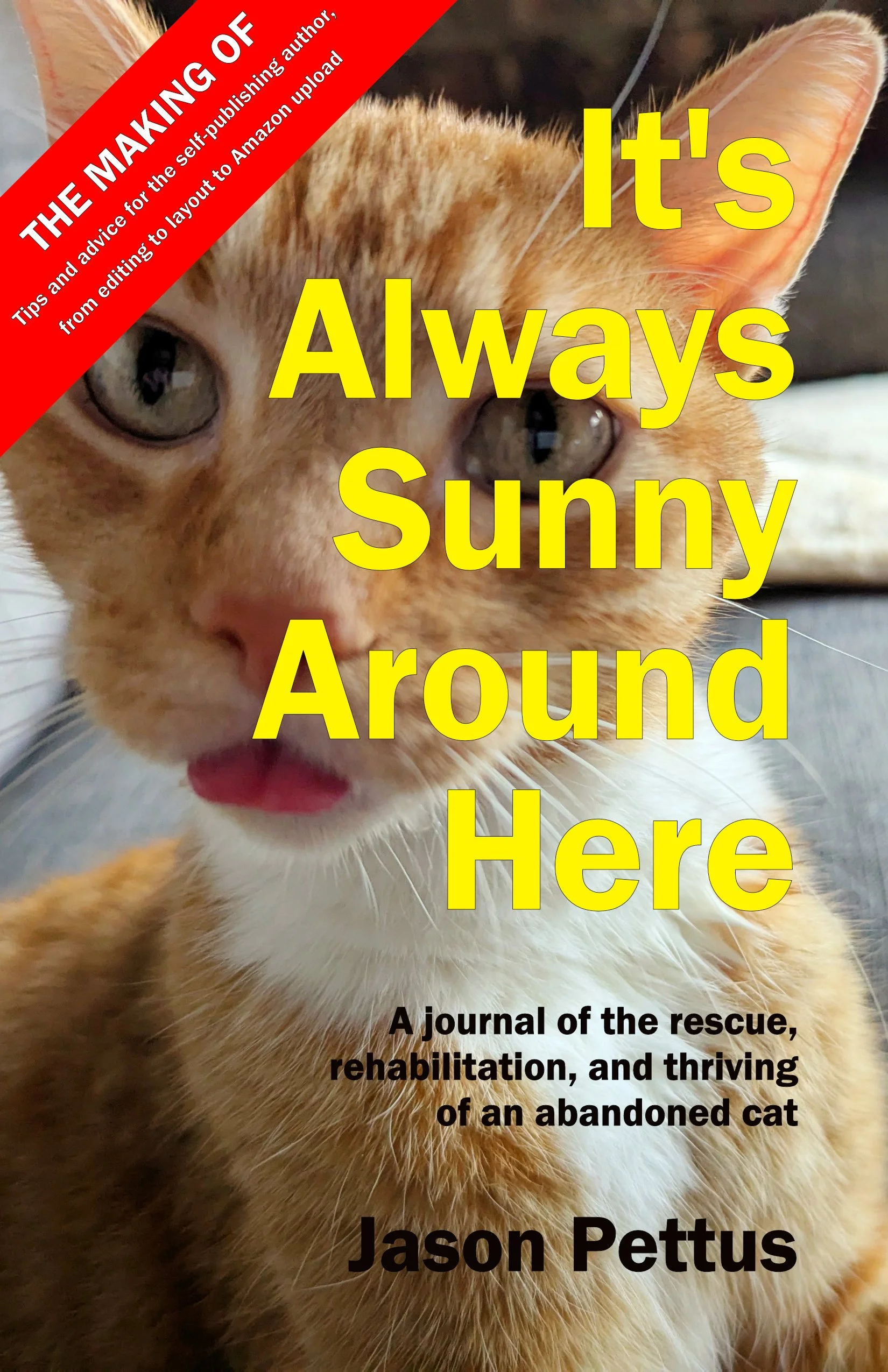
To read this making-of guide as a downloadable ebook, click here for the EPUB and click here for the Kindle version (AZW). To look at and/or buy the book being discussed, head over to Amazon.
As easy as Amazon has made it over the years to self-publish a book, you still can’t get around the fact that four-color printing machines (the kind that output your book’s cover) are huge, expensive, old-fashioned, and incredibly finicky; so you are likely going to have at least one technical error during what should be the easy and flawless process of uploading all these book pieces to Amazon and getting your book ready to go on sale to the public, not only with the cover but sometimes with the book’s interior layout as well. This is another moment in the publishing process that isn’t going to take much of your time (you should be able to upload all your pieces, and type in all your metadata, in under an hour), so perhaps doesn’t deserve an entire chapter of its own in this book; I’m doing so anyway so to have an excuse to talk about something I discussed before, which is the absolute crucial importance of building in enough time to make sure everything goes perfectly, then resisting the urge to hastily speed up when inevitably you get close to your self-declared deadline and realize you still aren’t close to being finished.
I tell all my clients that, no matter how much time they set aside to edit, design, and publish their book, it will always (always) take at least a couple more weeks than this to actually pull off, and in some cases even a couple more months. But you have a huge advantage that traditional presses don’t, which is that you don’t have the gears of an entire company and dozens or hundreds of employees to worry about, which means that you have the luxury of simply changing your release date when unexpected problems pop up. So why aren’t you doing this?! Time after time, with client after client, I see authors get dysfunctionally obsessed with making their self-imposed publishing date of April 17 or whatever it is, literally just randomly pulled out of a hat simply to have a date to mention, but that they then become fixated on when things start going wrong.
That leads to rushing through the last steps of the process, which leads to big dumb mistakes that can instantly ruin your book. There is absolutely nothing more heartbreaking than to watch an author spend months meticulously going through this process, then to speed everything up in the last few days when they realize they’re not going to make their self-imposed deadline, and end up releasing a book that has a spelling mistake right on the front cover. That will make your audience roll their eyes in frustration and say, “Why should I bother buying this book? The author can’t even spell the freaking title right!”; and that instantly undoes all the work you’ve been meticulously doing over those last few months.
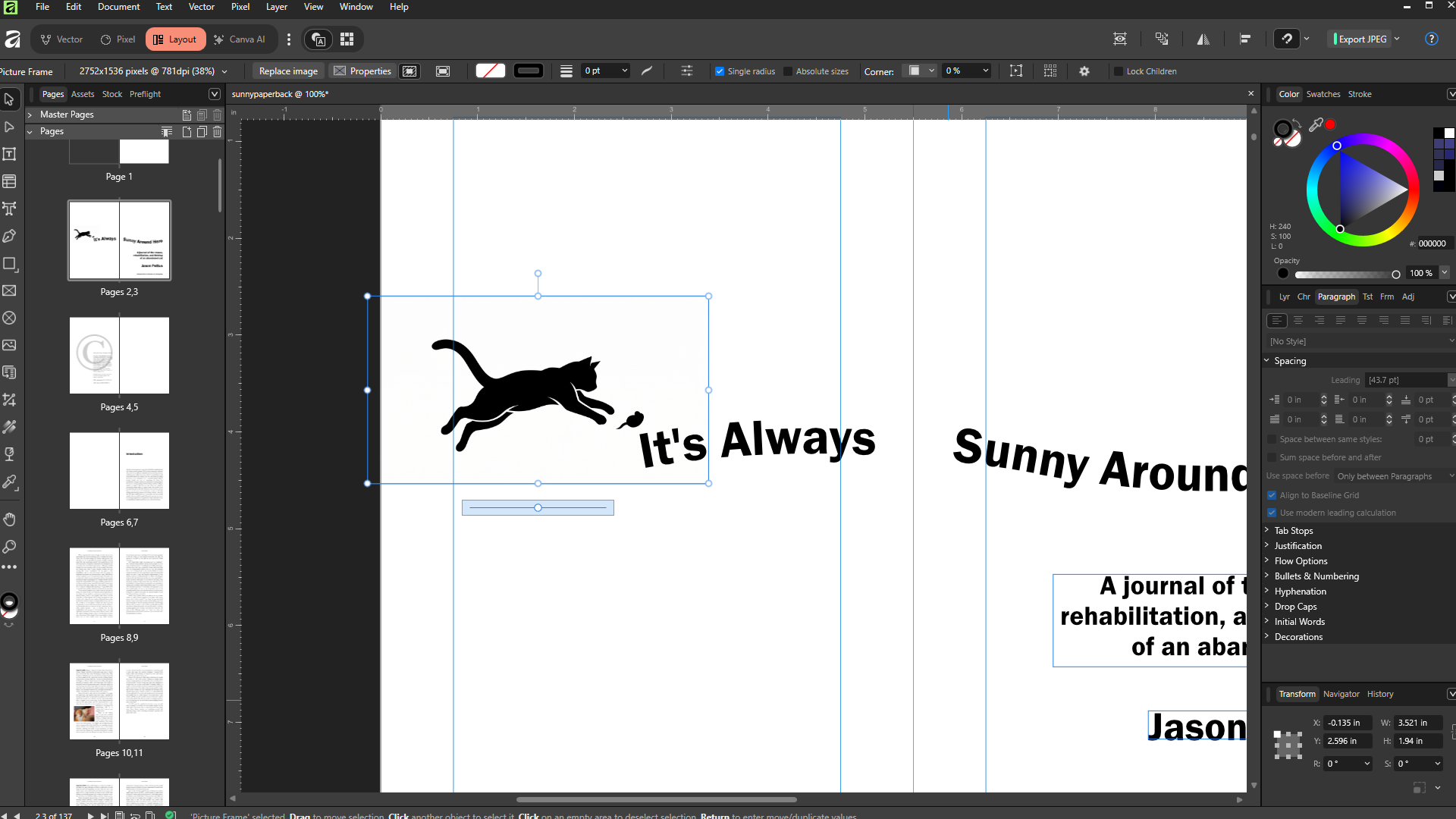
(Click on the image for the full-sized version.) In my case, for example, I too had a technical error come up with Sunny that took me a few days to diagnose; what I finally figured out was that one of my image boxes in Affinity was stretching out into the “bleed” area of the book pages (which is the eighth of an inch around every side that the printing machines eventually cut off with a giant sharp knife, so to make your finished book nice and straight and tidy), which I didn’t notice during the design phase because the image inside the box was appearing with no problems, just that the literal invisible border around the image was drifting off past the edge of the page. That didn’t affect my book’s release, because I purposely kept the dates vague (the official release date of Sunny was “whenever I get it done”); but if I had been running behind the whole time, and suddenly found myself uploading the pieces just a day before the book was to “officially” come out, it would have caused a lot more stress and problems for me.
In general, though, this process should go relatively fast and easy; and once it’s done, then it’s simply a matter of checking out all the details one more time, then changing the book’s status at Amazon from “draft” to “active.” Congratulations—your book now exists, and is ready to start being purchased by an eager and excited audience (or, well, your mother, anyway). Before we wrap things up, though, I thought you might like to hear why I didn’t bother making an audiobook for this particular title, nor why I’m not doing any advertising or other promotions for it. In the final chapter coming next, I explain why.